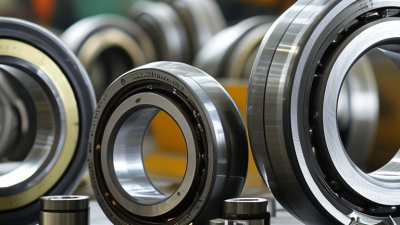
Selecting the right Power Bearings can determine whether an industrial machine runs smoothly or stops unexpectedly. A bearing may look small, yet it carries heavy radial loads, absorbs axial forces, and controls shaft movement inside demanding equipment. In steel mills, conveyors, pumps, turbines, and gearboxes, temperature, contamination, vibration, and misalignment constantly test bearing performance.
Tedric A. Harris, a respected rolling-bearing researcher and author, emphasized this practical point: “Bearing life depends on more than load capacity.” His observation remains relevant today. A bearing rated for extreme loads can still fail early when lubrication is inadequate or installation is careless. Small errors matter.
This guide examines seven Power Bearings suited to industrial applications. It considers deep-groove ball bearings, cylindrical roller bearings, spherical roller bearings, tapered roller bearings, thrust bearings, needle bearings, and split bearings. Each type offers a different balance of load capacity, speed, alignment tolerance, maintenance needs, and service life. The choice should match the machine, not merely the catalogue rating.
Look beyond the specification sheet.
For example, a dusty conveyor may need stronger sealing, while a high-speed motor may require lower friction and precise clearance. Real-world experience also reveals an uncomfortable truth: no bearing is universally “best.” Some recommendations may change after measuring shaft deflection, checking grease condition, or reviewing failure marks. That uncertainty deserves attention. Reliable selection combines manufacturer data, engineering judgment, installation discipline, and regular inspection. The following comparison provides a practical starting point, while acknowledging that field conditions can challenge even careful calculations.
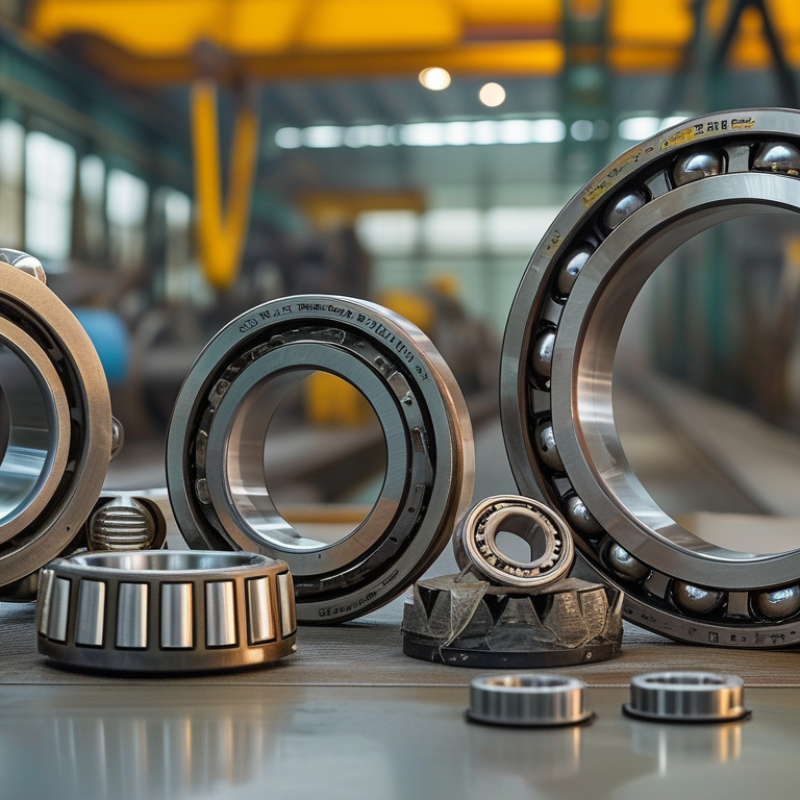
Power bearings are rolling or sliding components that support shafts while transmitting mechanical power. They appear in electric motors, gearboxes, pumps, compressors, and conveyor drives. Their job is simple but demanding: carry radial or axial loads, control shaft movement, and limit friction under continuous rotation.
The U.S. Department of Energy estimates that motor systems consume about 69% of electricity used in U.S. manufacturing. That figure explains why bearing selection affects more than maintenance. Lower friction can reduce heat, energy loss, and unplanned downtime. The seven common choices include deep-groove ball, angular-contact ball, cylindrical roller, spherical roller, tapered roller, thrust ball, and thrust roller bearings. Each suits a different load pattern. Tapered rollers handle combined loads well. Thrust bearings manage strong axial forces. Spherical rollers tolerate shaft misalignment.
ISO 15243 identifies damage modes such as fatigue, wear, corrosion, and electrical erosion. These failures often begin quietly. A faint rumble, rising housing temperature, or darkened grease may be the first warning. In field inspections, contamination is easy to underestimate. Dust can enter through a damaged seal, while excess grease can also create heat. The term “power bearing” is not perfectly standardized, so engineers should confirm load, speed, lubrication, alignment, and operating temperature before choosing a design. A bearing that works well in a clean motor may fail quickly inside a dusty conveyor.
Choosing among seven industrial power-bearing options starts with the machine, not the catalogue. Define radial and axial loads, shaft speed, duty cycle, shock, temperature, and contamination. ISO 281:2007 provides the basic rating-life method, but calculated life is not a guarantee. It assumes controlled conditions. Real plants rarely cooperate. A bearing beside a dusty conveyor may fail from seal damage before fatigue appears.
Evaluate dynamic load rating against the actual load spectrum, not peak load alone. Check limiting speed, clearance, fit, and allowable misalignment. ISO 15243:2017 helps classify fatigue, wear, corrosion, and electrical erosion. This supports a defensible selection review. Lubrication deserves equal attention. Grease viscosity, relubrication intervals, and oil cleanliness can change heat generation and service life. The U.S. Department of Energy reports that motor-driven systems consume about 70% of industrial electricity in U.S. manufacturing. Lower friction matters, but efficiency claims require measured torque and temperature data.
Inspectability is another selection criterion. Plan vibration checks, temperature trending, and shaft-grounding controls where electrical current is possible. ISO 20816-1 provides general vibration evaluation guidance. A low-cost bearing can become expensive after one unplanned shutdown. Yet oversized capacity is not automatically better. Excessive stiffness, poor fits, or unsuitable lubricant can create new problems. Review installation tolerances, test evidence, and contamination controls. Then challenge the assumptions. The load may be estimated poorly. The best bearing survives the real duty cycle, not the clean spreadsheet.
Key criteria for evaluating industrial power bearings
The chart uses a relative engineering index from 1 to 5 based on established bearing characteristics: radial-load capability, axial-load capability, high-speed suitability, and tolerance for shaft misalignment. Actual selection should also consider load magnitude, operating temperature, lubrication, contamination, mounting accuracy, and required service life.
7 Best Power Bearings for Industrial Applications?
Seven Leading Power Bearing Types and Their Core Features
Industrial power systems demand bearings that tolerate load, speed, heat, and contamination. No single type performs best everywhere. Selection should begin with shaft speed, load direction, alignment, lubrication, and maintenance access.
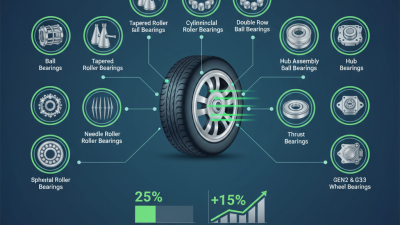
Deep-groove ball bearings handle radial loads and moderate axial loads. They suit electric motors, pumps, and conveyor rollers. Angular-contact ball bearings support combined loads at higher speeds. They require accurate mounting. Thrust ball bearings manage axial forces, such as those found in vertical drives. They are less suitable for heavy radial loading.
Cylindrical roller bearings carry high radial loads through line contact. They work well in gearboxes and heavy machinery. Tapered roller bearings handle combined radial and axial forces. Their preload needs careful control. Spherical roller bearings tolerate shaft deflection and housing misalignment. That forgiveness can prevent early failure. Needle roller bearings provide high load capacity in compact spaces. They fit applications with limited radial clearance. But their smaller rollers demand clean lubrication.
In field maintenance, contamination causes more failures than many designers expect. Sealed versions reduce dirt entry, while open designs simplify relubrication. Heat, vibration, and unusual noise should be recorded during inspections. Calculations can guide selection, but real operating conditions may disagree. A bearing rated for heavy loads can still fail under poor alignment. Keep that in mind. Engineers should verify fatigue life, clearance, shaft fits, and lubricant compatibility before approval. Sometimes the quieter option is not the longest-lasting one.
| Bearing Type | Primary Load Direction | Load Capacity | Speed Capability | Misalignment Capability | Core Features | Typical Industrial Applications | Main Limitations |
|---|---|---|---|---|---|---|---|
| Deep-Groove Ball Bearing | Radial and moderate axial loads in both directions | Moderate | High | Low | Simple construction, low friction, quiet operation, and strong availability in many standard sizes. Sealed versions can retain lubricant and reduce maintenance. | Electric motors, pumps, fans, conveyors, gearboxes, machine tools, and general rotating equipment | Not the preferred choice for very heavy loads, severe shock loading, or significant shaft-to-housing misalignment |
| Angular-Contact Ball Bearing | Radial and axial loads, usually with axial load in one primary direction | Moderate to high | High | Low | Designed with a contact angle that supports combined loads. Can be arranged in pairs or sets for higher axial capacity, rigidity, or bidirectional loading. | High-speed spindles, pumps, compressors, screw drives, precision gearboxes, and machine-tool assemblies | Correct mounting arrangement and preload are important; sensitive to excessive misalignment and poor installation |
| Cylindrical Roller Bearing | Primarily radial loads; selected designs can support limited axial loads | High to very high | Moderate to high | Low to moderate, depending on design | Line contact between rollers and raceways provides high radial stiffness and load capacity. Some configurations accommodate axial displacement caused by thermal expansion. | Electric motors, generators, gearboxes, rolling mills, industrial transmissions, and heavy-duty machinery | Most configurations have limited axial-load capability; alignment, lubrication, and surface finish strongly affect service life |
| Spherical Roller Bearing | Heavy radial loads and moderate to high axial loads | Very high | Moderate | High | Two rows of barrel-shaped rollers provide high load capacity and automatic self-alignment. Suitable for shaft deflection, housing deformation, and shock loads. | Mining equipment, conveyors, crushers, paper machinery, fans, pumps, and large industrial gear drives | Higher friction and heat generation than many ball bearings; requires adequate lubrication and installation space |
| Tapered Roller Bearing | Combined radial and axial loads | High to very high | Low to moderate | Low | Conical rollers and raceways efficiently handle combined loads. Axial capacity increases with the contact angle, and paired arrangements can support loads in both directions. | Industrial gearboxes, wheel-end systems, heavy conveyors, construction machinery, and high-load transmission shafts | Usually requires accurate adjustment of internal clearance or preload; generates more friction than many ball-bearing designs |
| Thrust Ball Bearing | Axial loads only or predominantly axial loads | Low to moderate | Moderate to high | Very low | Compact and effective for light-to-moderate axial loads. Single-direction designs support axial force in one direction, while double-direction designs support both directions. | Vertical shafts, screw mechanisms, light-duty turntables, instrumentation, and low-load positioning equipment | Not suitable for significant radial loads, shock loading, or shaft misalignment; speed and lubrication limits must be observed |
| Spherical Roller Thrust Bearing | Very high axial loads with accompanying radial loads | Very high | Low to moderate | High | Asymmetric spherical rollers provide high axial capacity and can accommodate shaft or housing misalignment. Many designs also permit axial displacement in one direction. | Heavy-duty gearboxes, vertical pumps, marine drives, turbines, extruders, and large rotating process equipment | More complex and space-intensive than thrust ball bearings; requires careful lubrication, alignment, and load control |
Choosing the best power bearing depends on load, speed, contamination, and shaft movement. Deep-groove ball bearings suit electric motors, conveyors, and moderate radial loads. Angular-contact ball bearings support machine-tool spindles and high-speed pumps. Cylindrical roller bearings handle heavy radial loads in gearboxes and rolling equipment. Tapered roller bearings manage combined radial and axial loads in wheel ends and industrial reducers. Spherical roller bearings tolerate shaft misalignment in crushers, fans, and belt conveyors. Needle roller bearings fit compact transmissions where radial capacity matters more than space. Thrust ball bearings work in low-to-moderate axial-load turntables and vertical shafts.
Application choice affects energy, downtime, and maintenance. The IEA’s Energy Efficiency 2023 report estimates that industry uses about 37% of global final energy. Small friction losses deserve attention. U.S. DOE motor-system guidance stresses alignment, lubrication, and load matching. In practice, a sealed deep-groove bearing may survive dusty conveyor service better than an oversized open design. That judgment needs field verification. ISO 281 life calculations help, but contamination and mounting errors can reduce predicted life. Record temperature, vibration, grease condition, and mounting force. These details create a reliable selection trail.
Tips: Use spherical rollers for misalignment, not bent shafts. Choose tapered rollers after checking preload and thermal expansion. High-speed spindles need controlled preload and clean lubrication. Recheck the choice after one operating cycle. Laboratory assumptions can be too optimistic.
Power bearings in industrial applications demand disciplined installation, lubrication, and maintenance. A strong bearing can fail quickly when alignment is ignored.
During installation, inspect the shaft, housing, seals, and bearing seats for burrs or impact marks. Clean components with approved solvents and lint-free cloths. Never hammer the race or transmit force through rolling elements. Use the correct fitting tool and measure shaft alignment before tightening. I have seen minor angular errors create unusual heat within hours. That inspection is easy to skip.
Lubrication must match the load, speed, temperature, and operating environment. Apply the specified quantity, because excess grease can raise friction and operating temperature. Use clean equipment and keep containers sealed. For oil systems, check level, viscosity, filtration, and leakage during scheduled rounds. A small sample can reveal water, metal particles, or oxidation. However, sampling alone is not enough. Visual and acoustic checks still matter.
Maintenance teams should record temperature, vibration, noise, speed, and relubrication dates. Compare readings with previous measurements rather than relying on one “normal” value. Check seals for cracking and remove nearby contamination before it reaches the bearing. Replace damaged parts promptly, but investigate the failure source first. I once treated repeated overheating as a lubrication problem; alignment was the real cause. That mistake reinforced the value of evidence-based inspections and clear maintenance records.